
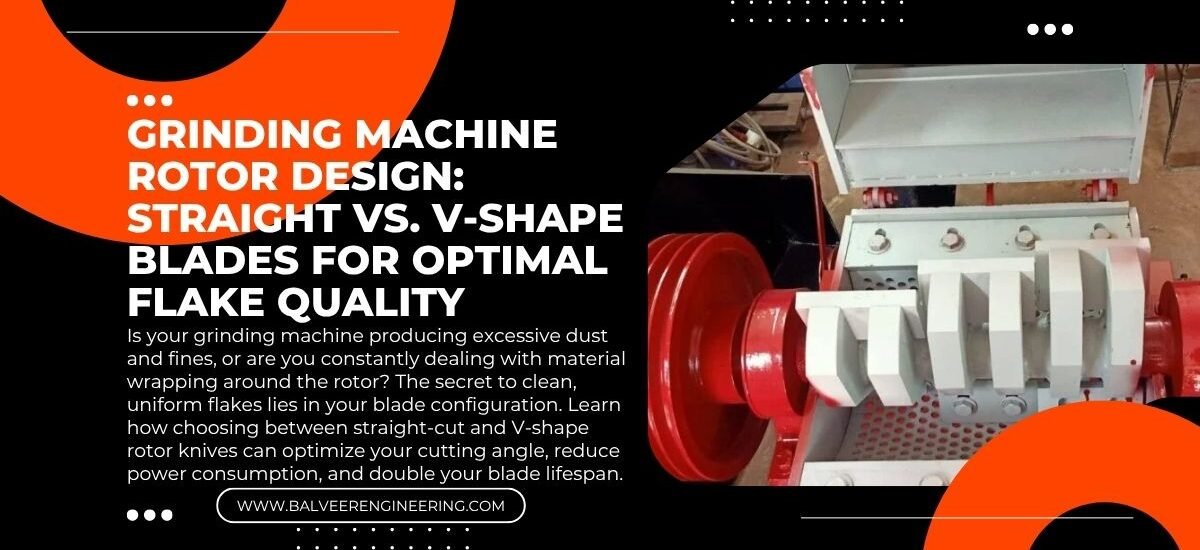
When operating a heavy-duty Plastic Scrap Grinding Machine, processing speed is only one part of the equation. The shape, angle, and layout of the spinning blades inside the cutting chamber dictate how cleanly the material is sliced, how much power the motor draws, and how much waste is generated in the form of fine plastic dust.
Many plant owners assume that any set of sharp knives will do the job. However, processing thin plastic film with a rotor configured for dense lumps will cause material to wrap, heat up, and clog the screen. Selecting the correct rotor configuration is the most effective way to eliminate these operational bottlenecks.
1. Straight-Cut Rotors: Brute Force for Rigid Profiles
Straight-cut (or flat-blade) rotors feature knives that run completely parallel to the bed blades. This setup delivers a straight, high-impact impact across the entire length of the blade simultaneously.
- Best Suited For: Thick-walled injection molded parts, heavy plastic crates, solid plastic sheets, and dense profiles.
- The Mechanical Action: Because the entire blade bites into the plastic at the exact same moment, this design provides maximum shearing force for rigid plastics that break relatively easily under impact.
- The Limitation: If you attempt to feed lightweight, flexible items like film or bags into a straight-cut rotor, the material tends to bounce around the chamber or get dragged through without being cut cleanly, leading to high friction and motor stress.
2. V-Shape (Staggered/Chevron) Rotors: Precision Scissors for Flexible Plastics
V-shape rotors, often called chevron or staggered configurations, arrange the rotor knives at a progressive angle pointing toward the center of the shaft.
- Best Suited For: Thin films, woven bags, plastic bottles, flexible packaging, and lightweight thermoformed trays.
- The Mechanical Action: Instead of striking the material all at once, a V-shape blade functions exactly like a pair of moving household scissors. The cut starts at the outer edges and moves smoothly toward the center point.
- The Major Advantage: This progressive scissoring action draws lightweight or flexible material directly into the center of the cutting chamber automatically. It prevents film from packing tightly at the sides of the rotor, reducing heat generation and eliminating the “rotor wrap” that forces unscheduled plant shutdowns.
3. Rotor Configuration Comparison Matrix
| Material Type | Straight-Cut Flat Blades | V-Shape Chevron Blades |
| Thin Plastic Film / Raffia Bags | High risk of friction and wrapping | Excellent pull-in and clean scissoring |
| Heavy Crates & Rigid Parts | High throughput, solid fracturing | Moderate performance, higher edge wear |
| Plastic Bottles (PET/HDPE) | Prone to material bouncing | Sweeps bottles into the cutting center |
| Dust & Fines Generation | High (due to blunt impact forces) | Low (due to clean, sharp slicing) |
4. Maximizing Energy Efficiency and Knife Longevity
The choice of rotor design directly affects your monthly electricity bill. A V-shape rotor distributes the mechanical load evenly throughout the rotation cycle rather than concentrating it into a single high-amperage impact stroke. This smooth distribution lowers the average power draw of your Plastic Scrap Grinding Machine, allowing you to get more kilograms of output per kilowatt-hour.
Furthermore, because V-shape configurations pull material away from the side walls, they dramatically decrease wear on the cutting chamber’s internal wear plates, saving you thousands in long-term refurbishing costs.


 Users Today : 9
 Users This Month : 553
 Total Users : 3474