
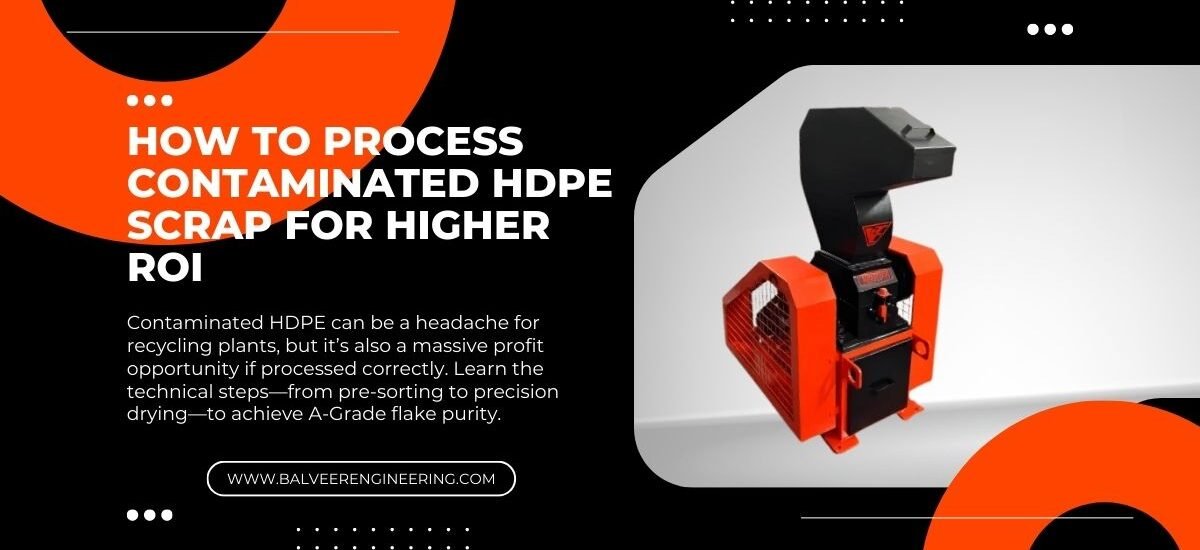
High-Density Polyethylene (HDPE) is one of the most sought-after materials in the recycling industry, valued for its durability and recyclability. However, the biggest challenge facing plant owners is contamination. Whether it’s oil residues, paper labels, or organic debris, contaminated HDPE drastically lowers your finished product’s value.
In this guide from our Plastic Material Guides series, we break down how to optimize your line to handle the dirtiest HDPE scrap.
1. The Pre-Processing Stage: Why Dry Cleaning Matters
2. Specialized Grinding Geometry
Processing contaminated HDPE requires a specific approach. Because the material is often coated in residue, your blades must be able to handle the abrasive nature of mixed-waste streams. Our Industrial Grinders utilize specific rotor speeds that prevent the plastic from “smearing” (heating up and sticking to the blade) during the reduction process.
3. The Importance of Aqueous Washing
4. Drying: The Final Quality Step
The most common mistake we see in HDPE plants is improper drying. If your flakes contain even 1% moisture, they will cause gas buildup in the extruder, leading to porous pellets. Using a high-capacity Plastic Waste Dryer Machine ensures your flakes are bone-dry and ready for high-value compounding.



 Users Today : 5
 Users This Month : 549
 Total Users : 3470