
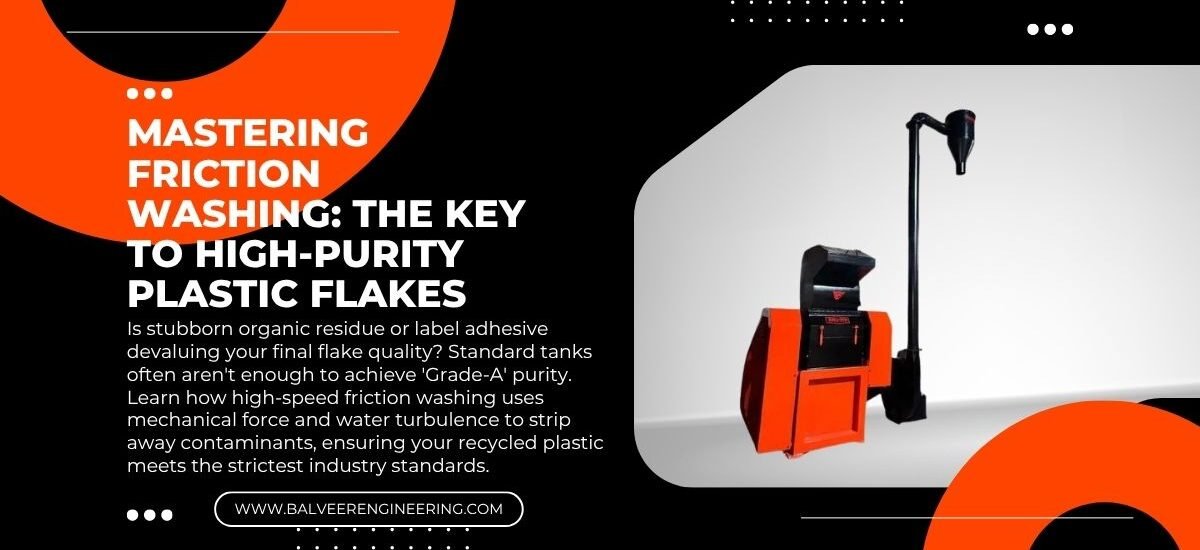
In the recycling industry, “dirty” material is a liability. Whether you are processing post-consumer PET bottles or HDPE containers, the surface of the plastic is often coated in adhesives, paper fibers, food remains, and soil.
While a standard float-sink tank is great for density separation, it lacks the mechanical “scrubbing” power needed to clean the surface of the flake. This is where the High-Speed Friction Plastic Washer becomes the most important machine in your line.
1. The Science of Mechanical Scrubbing
Friction washing doesn’t just “rinse” the plastic; it uses a high-speed rotor to create intense turbulence. As the plastic flakes collide with each other and the screen of the machine, the mechanical impact physically breaks the bond between the contaminant and the polymer.
- Impact Force: The rotor flings the material at high velocity, forcing dirt and paper pulp through the screen holes.
- Water Consumption: Modern friction washers are designed to be water-efficient, using the centrifugal force to separate dirty water from the clean flakes instantly.
2. Eliminating the "Glue" Problem
Adhesives are the enemy of high-quality recycling. If glue from labels remains on the flake, it will burn inside your extruder, causing black spots and poor structural integrity in the final pellet.
- Thermal Friction: The rapid movement within the washer generates a small amount of heat through friction. This heat, combined with water, softens the adhesives, making them significantly easier to strip away compared to cold-water soaking.
3. Protecting Your Downstream Equipment
By removing sand, grit, and paper pulp in the friction washing stage, you are protecting your most expensive downstream assets:
- Plastic Waste Dryer Machine: Clean flakes mean your dryer stays free of sludge and buildup, maintaining its energy efficiency.
- Extruder Screws: Grit and sand are abrasive. Removing them early prevents the premature “scoring” or wearing down of your extruder screws and barrels.




 Users Today : 3
 Users This Month : 547
 Total Users : 3468