
The Challenge: High Rejection Rates and Blade Failure
In the plastic recycling sector, many plant owners focus all their attention on optimizing machinery speeds and reducing electricity bills. However, the truest determinant of your weekly profitability happens long before any machine is turned on—it is settled at the scale when you purchase your raw material.
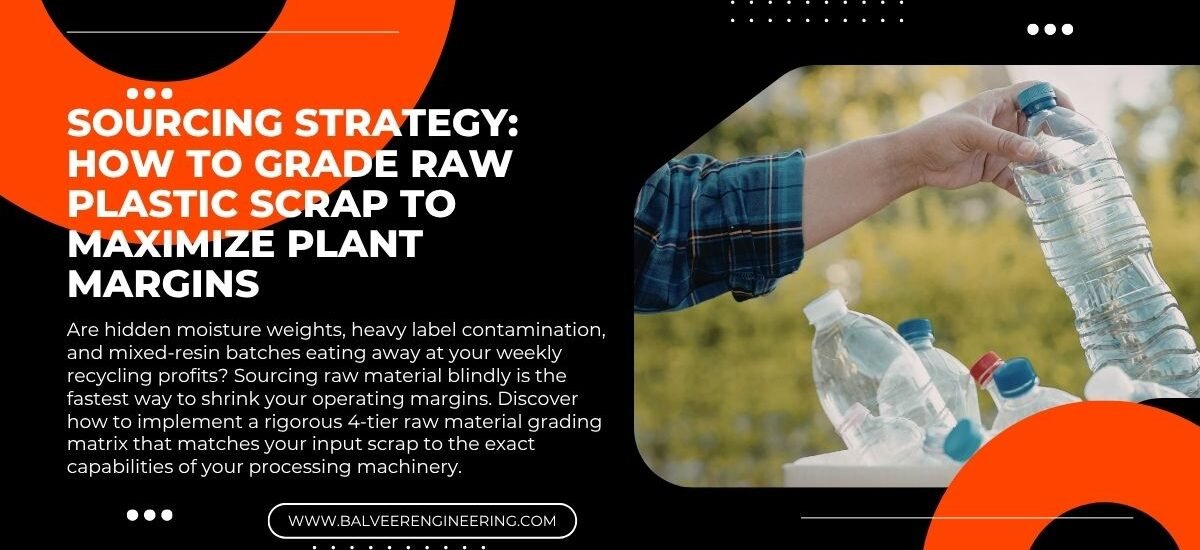
Sourcing raw plastic scrap blindly without a strict quality matrix is an expensive gamble. If a batch contains hidden moisture, excessive paper labels, or un-sorted polymer types, your processing cost per kilogram skyrockets. To build a highly profitable and scalable recycling business, you must implement a systematic grading structure for all incoming waste streams.
1. The 4-Tier Scrap Grading Matrix
Before accepting a truckload of scrap, your procurement team should audit and classify the material based on this industrial framework:
- Grade A (Clean Industrial Scrap): This is the gold standard. It consists of post-industrial runners, factory trimmings, or misprinted items directly from manufacturing plants. It has zero label contamination, zero dirt, and a single, known resin profile. It can be fed directly into a high-speed Plastic Scrap Grinder with virtually zero yield loss.
- Grade B (Sorted Post-Consumer Bales): This includes compressed bales of a single material type (such as 100% transparent PET bottles or 100% milk jars). While it contains labels and surface dust, the resin is uniform. This material requires pre-processing through a Label Remover Machine before hitting your cutting chamber.
- Grade C (Mixed Residential Waste): This is un-sorted post-consumer plastic containing a mix of HDPE, PP, and PVC containers. It features heavy dirt contamination and residual liquids. Processing this requires a robust initial size reduction via a heavy-duty Plastic Shredder followed by aggressive float-sink tank sorting.
- Grade D (Highly Contaminated/Composite Scrap): Multi-layered films, laminated plastics, or agricultural waste heavily coated in mud and stones. This grade carries the highest yield loss and requires intensive washing, meaning you should only buy it at a steep discount to protect your operational margins.
2. Matching Material Grades to Your Machinery Setup
[Grade A: Clean Factory Scrap] ──➔ Direct Feed ──➔ [Plastic Scrap Grinder] ──➔ Premium Flakes
[Grade B: Sorted Bottle Bales] ──➔ Pre-Process ─➔ [Label Remover Machine] ─➔ [PET Crusher]
[Grade C: Mixed Coarse Waste] ──➔ Initial Bulk ➔ [Plastic Shredder Machine] ➔ Downstream Sorting
3. Calculating the "True Cost" of Your Input
When purchasing scrap, never look at the raw price per ton alone. You must calculate the Net Usable Yield after processing.
For instance, consider buying a cheap load of Grade C material versus a pricier load of Grade A:
True Cost per Kg = Purchase Price+ Processing Costs / Final Weight of Pure Flakes
If a load of contaminated bottles is cheap but has a 15% weight loss from labels, leftover liquid, and dirt, plus it forces you to run your Plastic Waste Dryer Machine on maximum power to remove moisture, its true cost might actually exceed that of clean, premium factory scrap. Tracking these numbers allows you to negotiate smarter, data-backed prices with your waste suppliers.
4. Setting Machinery Configurations Based on Grade
An adaptable plant is a profitable plant. Once you understand the incoming grade of your material, you can adjust your equipment parameters to optimize your operational expenses:
- When running clean Grade A materials, maximize your conveyor speeds and utilize your Grinder Machine with Cyclone Blower at full capacity for rapid evacuation.
- When shifting to Grade B or C post-consumer materials, throttle the intake feed rate slightly to give your downstream friction washers and purification systems adequate residence time to strip away surface impurities completely.
Conclusion: Smart Sourcing Drives Scalability
A successful recycling operation isn’t built on luck—it is built on predictable metrics. By establishing a strict intake grading system, you protect your core size-reduction assets from premature wear, eliminate unexpected yield drops, and ensure your facility maintains a healthy, predictable return on investment week after week.




 Users Today : 9
 Users This Month : 553
 Total Users : 3474