
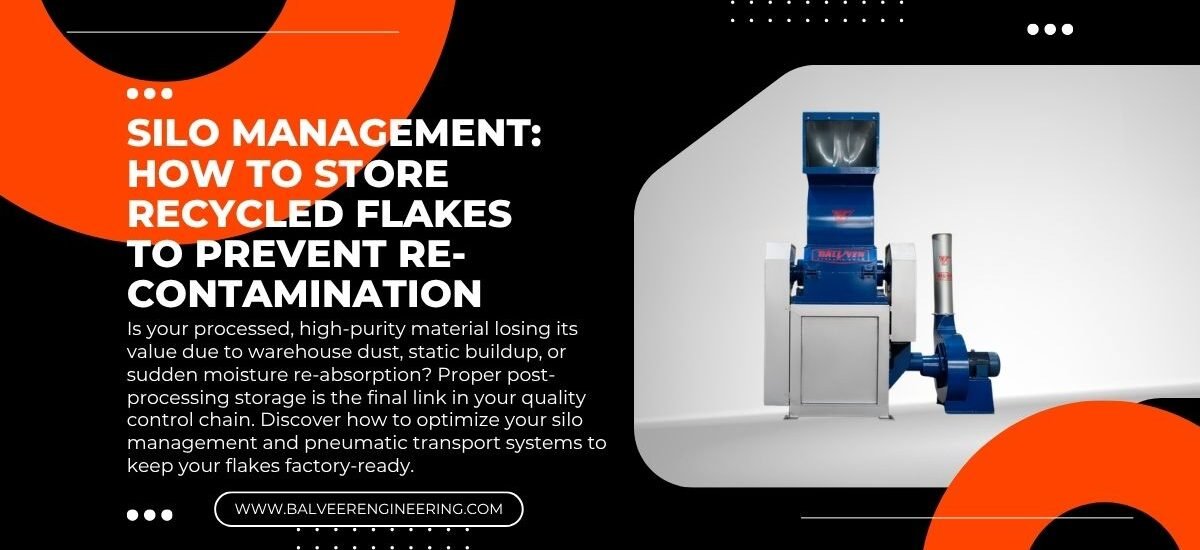
You have spent considerable time and energy shredding your scrap in an Industrial Plastic Grinder, running it through high-speed washing lines, and ensuring it is bone-dry. But the processing journey doesn’t end when the material leaves the machine.
Many recycling plants lose critical quality points right at the finish line due to poor storage practices. Storing premium flakes in open bags or poorly maintained bins invites dust, humidity, and cross-contamination, instantly devaluing your hard work.
1. The Risk of Environmental Re-Absorption
Plastic flakes, especially when fresh out of a high-temperature Plastic Waste Dryer Machine, are highly susceptible to environmental factors:
- Moisture Regain: Polymers like PET are hygroscopic—they actively pull moisture out of the air. If stored in a humid warehouse without sealed protection, your “0% moisture” flakes will quickly absorb ambient water vapor, causing defects during later extrusion.
- Airborne Contamination: Warehouse dust, soot from forklifts, and pests can quickly settle onto open storage boxes, turning a premium batch into utility-grade scrap.
2. Implementing Stainless Steel Silo Systems
For industrial-scale operations, shifting from traditional woven bags (jumbo bags) to enclosed Stainless Steel (SS 304) Silos is the gold standard.
- Complete Isolation: Enclosed silos shield your processed material from dust, moisture drops, and external contaminants.
- First-In, First-Out (FIFO): Gravity-fed cone silos ensure proper material rotation. The oldest material is discharged from the bottom first, preventing old batches from sitting stagnant at the corners of your warehouse.
3. Managing Static and Material Flow
Shredded plastic flakes are lightweight and highly prone to static electricity, especially during pneumatic (air-driven) transport into storage bins.
- The “Clinging” Problem: Static causes fine plastic dust and small flakes to stick to the internal walls of your pipes and silos. When you switch material streams (for example, moving from green HDPE to white HDPE), this residual stuck material drops down, causing color contamination.
- The Solution: Ensure your entire pneumatic transport line and silo structure are completely grounded. Grounding dissipates static charges, allowing the flakes to flow smoothly without clinging to the metal surfaces.
4. Routine Silo Audits
A storage system requires its own maintenance schedule just like your machinery:
- Cross-Contamination Flush: Before introducing a new resin type or a different color batch into a silo, perform a thorough clean-out. Use a high-pressure air blast to clear out any hidden pockets of material in the discharge cone.
- Condensation Checks: In areas with high temperature swings between day and night, check the internal roof of outdoor silos for condensation buildup, which can drip back down onto dry material.





 Users Today : 5
 Users This Month : 549
 Total Users : 3470