
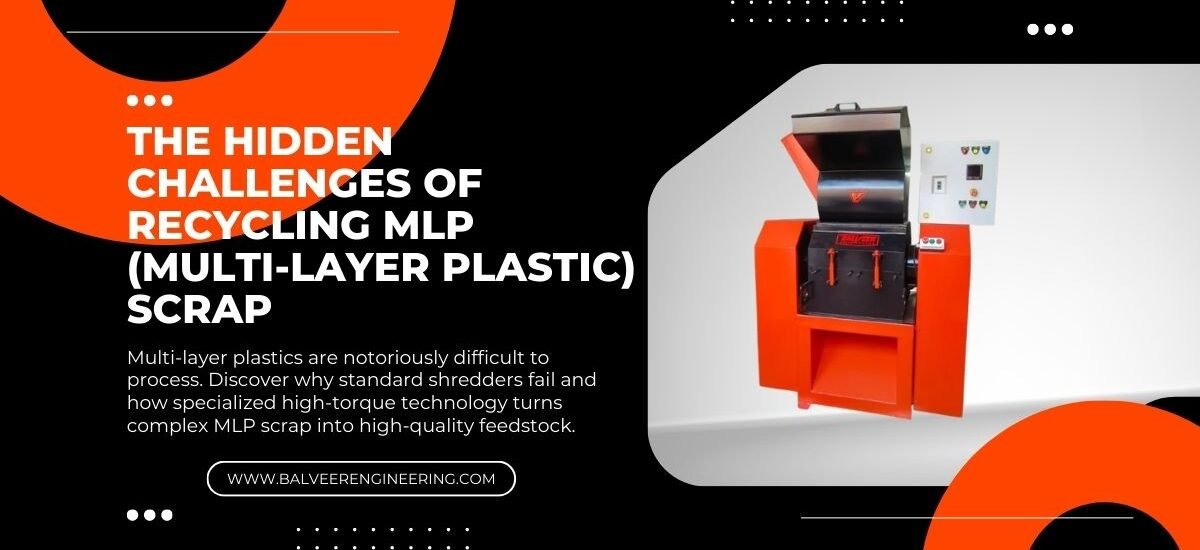
Multi-Layer Plastic (MLP) is arguably one of the most complex materials to process in the industry today. In our latest technical guide within our Recycling Solutions & Tech series, we break down why standard machinery fails with composite films and how you can optimize your output quality.
Why MLP Recycling is Technically Demanding
Unlike mono-layer plastics (like clean PET bottles or HDPE pipes), MLP is composed of several thin layers—often including PE, PP, EVOH, and sometimes metallized layers. These materials have different melting points and mechanical properties.
When processed through standard grinding equipment, you often encounter:
- Elasticity Issues: The film layers “stretch” rather than break, leading to clogged rotors.
- Thermal Degradation: Friction causes partial melting of the lower-melting-point layers, creating “sticky” scrap that ruins your extruder quality.
- Inconsistent Flake Size: Without the right cutting geometry, you get a mix of large sheets and fine dust, which is difficult to pelletize.
The Balveer Engineering Solution: Specialized Shredding
At Balveer Engineering, we have developed a specific rotor design to address these MLP plastic recycling challenges. Our industrial shredders don’t just “cut”; they tear through composite layers with high-torque, low-speed gearboxes.
Technical Specs Your MLP Shredder Must Have:
- High-Torque Gearbox: Essential for overcoming the resistance of multi-layer composite structures without stalling.
- Hardened Alloy Blades: MLP can be surprisingly abrasive. Our precision-ground alloy blades maintain sharpness significantly longer than standard steel.
- Adjustable Screen Geometry: Because MLP thickness varies, our machines allow for quick screen adjustments to control your output flake size, ensuring it is ready for your Plastic Waste Dryer Machine.
Optimizing Your Entire Production Line
Recycling MLP successfully isn’t just about the shredder. Once the material is reduced, it must be cleaned and dried to remove contamination from food residues. We recommend integrating our SS 304 Hopper Machine to ensure that your shredded material remains free from metallic contamination throughout the drying process.
Conclusion: Is MLP Waste or Resource?
“MLP isn’t just waste; it’s a high-value resource when managed with the right equipment. For a deeper look at material science, check out our Plastic Material Guides, or if you want to see how we helped a client increase their MLP throughput by 40%, visit our Case Studies & Results section.

 Users Today : 5
 Users This Month : 549
 Total Users : 3470