
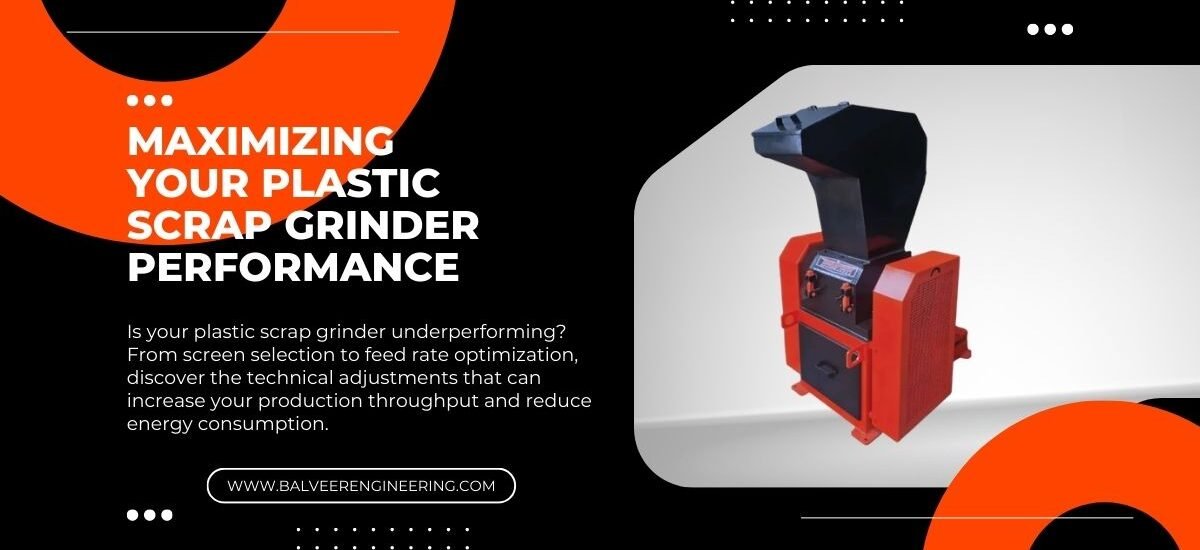
The plastic scrap grinder is the “engine room” of your recycling facility. While it might look like a straightforward piece of equipment, the difference between a grinder that runs at 70% capacity and one that runs at 95% is often found in the subtle calibration of the machine.
In this guide, we break down the three technical levers you can pull to increase your throughput and extend your blade life.
1. Screen Geometry: The Secret to Uniformity
- The Rule of Thumb: Use a smaller screen size for thin films and a larger, reinforced screen for thick, rigid plastics.
- Pro-Tip: Regularly inspect your screens for “dead zones”—areas where plastic builds up and prevents flow. A clean screen is the fastest way to drop your motor’s amperage draw.
2. Rotor Speed vs. Torque Balance
Recommendation: Our Industrial Plastic Grinders feature variable frequency drives (VFDs) that allow you to adjust rotor speed based on your current material stream.
3. The Feed Rate Trap
The Solution: Use an automated SS 304 Hopper Machine to ensure a steady, consistent feed rate. Consistent feeding keeps the motor in its “sweet spot” for efficiency and longevity.
4. Preventative Maintenance: The 500-Hour Check
Don’t wait for a breakdown. Every 500 hours of operation, you should:
- Check Blade Clearance: Ensure the gap between the rotor knife and the bed knife is within the manufacturer’s spec.
- Inspect Belt Tension: A loose belt will result in power loss and premature motor wear.
- Bearing Lubrication: Proper grease levels are essential for high-torque grinding.
Conclusion: Quality Output Starts with the Grinder
Your grinder determines the quality of everything that follows in your recycling line. If your flakes are poor, your extruders will struggle and your final pellet quality will suffer. By optimizing your grinder setup, you are essentially “tuning” your entire production line for higher profitability.


 Users Today : 5
 Users This Month : 549
 Total Users : 3470