
1. Identify Your Bottleneck (Theory of Constraints)
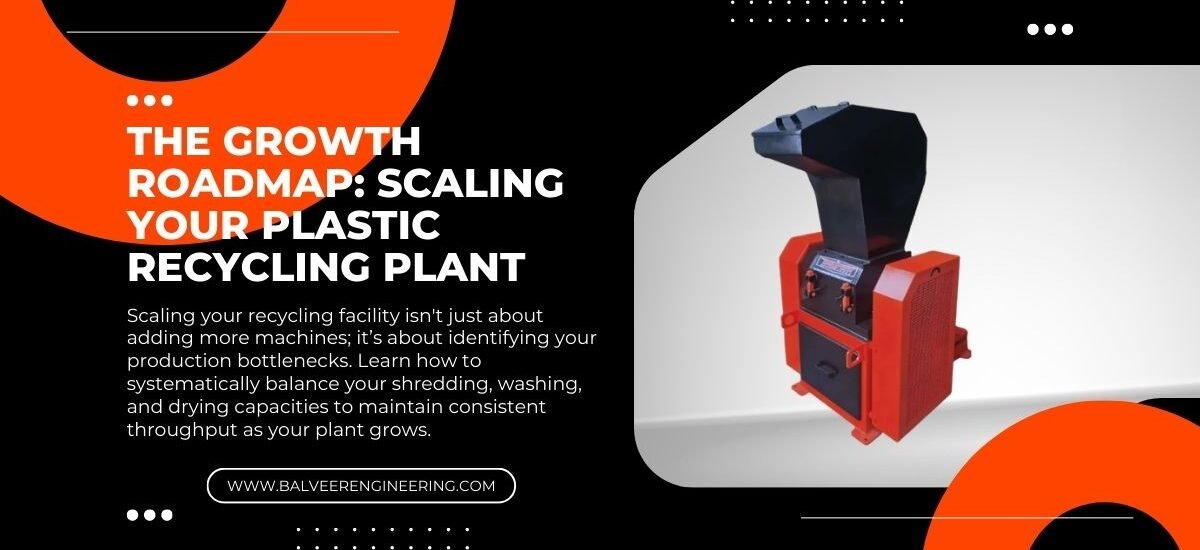
Before you add capacity, find the bottleneck. Is it your Plastic Scrap Grinder Machine? Is it the drying process?
The Lesson: If your grinder can handle 500kg/hr but your dryer can only process 300kg/hr, buying a bigger grinder won’t make you more money. It will only create a mountain of unprocessed material. Always scale your slowest process first.
2. Standardize Your Material Input
As you scale, you cannot rely on “random” scrap. You need a consistent feedstock to maintain high-speed operations.
- The Strategy: Build direct relationships with waste collection centers or commercial waste generators. By controlling the quality of your incoming material, you reduce the time your sorters spend on manual removal, allowing you to run your lines at maximum capacity.
3. Embrace Process Automation
Scaling is the time to replace manual labor with precision technology.
- Automated Feeding: Manual feeding is erratic. As discussed in our previous guides, moving to an SS 304 Hopper Machine ensures the machine is always full but never choked.
- Continuous Monitoring: Install ammeters and flow meters on your machines. When you are managing three lines instead of one, you need real-time data to spot a “choke point” before the entire plant shuts down.
4. Build for Maintenance
When you are a small operation, you can fix things on the weekend. When you are at scale, downtime is a financial crisis.
- The Roadmap: Integrate a Preventative Maintenance Schedule from Day 1 of your expansion. Keep an inventory of critical “wear parts” (knives, screens, belts) on-site. The cost of a spare part on the shelf is pennies compared to the thousands you lose during a two-day wait for a courier.
Conclusion: Scalability is an Engineering Choice
Scaling a plant is about creating a modular system that flows. Whether you are adding a second line or upgrading your existing one, ensure that every component—from the shredder to the final Plastic Waste Dryer Machine—is balanced to work as a single, high-efficiency engine.



 Users Today : 9
 Users This Month : 553
 Total Users : 3474